
Welcome back. Let’s talk about a real-life skill that can make school, home, and everyday responsibilities easier.
You’ve probably heard adults tell you that finishing your work matters. That’s true. But there is another skill that is just as useful and often isn’t taught directly: knowing how to clearly tell someone what you finished.
Instead of simply saying, “I’m done,” you can learn to communicate what you worked on, what changed, and whether anything still needs to happen next.
It only takes a few extra seconds, but it can help adults understand you better, reduce unnecessary reminders, and give you more opportunities to handle responsibilities independently.
Why “I’m Done” Doesn’t Always Feel Finished
A lot of kids naturally say:
- “I’m done.”
- “I finished.”
- “I did it.”
There’s nothing wrong with those answers. The problem is that they don’t give the other person much information.
An adult may still wonder:
- What exactly did you finish?
- Did you complete every part?
- Did you check your work?
- Is there anything left to do?
- Does someone else need to know?
That’s why you may feel completely finished while the adult immediately starts asking more questions.
What Adults Are Really Listening For
Most adults aren’t looking for a long explanation. They simply need enough information to understand what happened.
A helpful update usually answers three things:
- What did you work on?
- What is finished now?
- Is there a next step?
Clear communication is also part of learning to listen and respond to instructions. Our guide to listening the first time explains how paying attention to what was actually requested can make completing a responsibility easier from the beginning.
A Simple Way to Say You’re Done
Try this formula:
What I worked on + what is finished now.
For example:
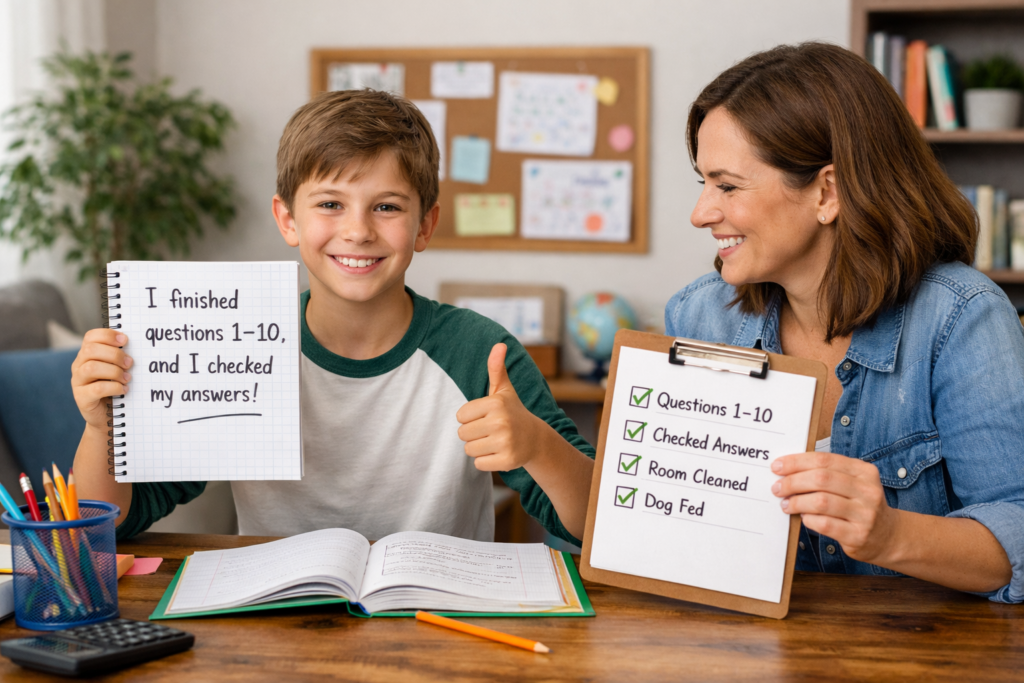
- “I finished questions 1 through 10, and I checked my answers.”
- “I cleaned my room. The floor is clear and my clothes are in the hamper.”
- “I practiced my song twice, and I worked on the part that was difficult.”
- “I fed the dog and refilled the water bowl.”
- “I finished my slides and sent the presentation to my group.”
Notice how each answer gives the adult enough information to understand what actually happened.
Why Clear Follow-Through Builds Trust
When you clearly communicate what you completed:
- Adults don’t have to guess what happened.
- You may need fewer follow-up questions.
- Responsibilities are easier to track.
- You show that you understand the full task.
- Other people can depend on your update.
Over time, consistent follow-through can lead to more independence because adults have more evidence that you can manage responsibilities without being reminded every step of the way.
This connects closely with how being a self-starter helps kids succeed. Independence grows when you begin noticing what needs to happen and taking appropriate action without waiting for someone to manage every step for you.
What If You’re Not Fully Done?
You don’t have to pretend something is finished when it isn’t.
A responsible update can explain both what you accomplished and what still needs to happen.
- “I finished the first part, and I’ll start the second part after dinner.”
- “I completed the questions I understood, but I’m stuck on number eight and need help.”
- “I practiced for five minutes, and I’m going to finish the other five after my break.”
- “I cleaned my desk, but I still need to organize the papers.”
This is still follow-through because you are clearly explaining the status instead of leaving someone else to discover what remains unfinished.
What If You Get Stuck?
Responsibility doesn’t mean you have to know how to solve every problem yourself.
If something is blocking you, try explaining:
- What you already tried.
- Where you got stuck.
- What kind of help you need.
- What you will do after you receive that help.
For example: “I finished the first three math problems, but I don’t understand number four. I reread the example, but I’m still confused. Can you help me understand the first step?”
That sounds very different from simply saying, “I can’t do it.”
This Is a Skill You’ll Use for Years
Learning how to communicate completion isn’t only useful with parents or teachers.
Older students and adults use the same skill in:
- Group projects
- Sports and clubs
- Volunteer activities
- Part-time jobs
- College
- Workplaces
The responsibilities become more complicated, but the basic idea stays the same: understand what you agreed to do, complete it, and communicate clearly when it is finished.
Teens can explore this idea further in Do What You Say You’re Going to Do: A Guide for Teens.
Practice Builds Independence
The Center on the Developing Child at Harvard University explains that skills including planning, focus, self-control, and managing information develop over time through experience and practice. You can learn more about these executive function and self-regulation skills.
That means no one should expect you to master follow-through instantly. Like other skills, it gets easier when you practice it repeatedly.
A Fun Way to Practice Choices and Responsibility
For younger kids who are still practicing decision-making and responsibility, What Should Danny Do? by Ganit and Adir Levy is an interactive story where children make choices for the main character and see how those decisions affect what happens next.
It can be a fun way for parents and kids to talk about choices, consequences, responsibility, and what could happen differently next time.
Try This Today
The next time you finish something, pause before saying only, “I’m done.”
Instead, try:
“I finished ________, and now ________ is done.”
If something remains unfinished:
“I finished ________. I still need to ________, and my next step is ________.”
It only takes a few extra seconds, but it can completely change the quality of the conversation.
That’s a real-life skill worth practicing.
A Note for Parents
Children may need prompting at first. Instead of immediately checking the task yourself, try asking:
- “Tell me what you finished.”
- “What changed?”
- “Is there anything left to do?”
- “What happens next?”
The long-term goal is not perfect reporting. It is gradually helping children communicate status, recognize completion, ask for help appropriately, and take more responsibility for their own follow-through.
If printable checklists, routines, and responsibility tools would help reinforce these skills at home, explore the Efficiency Plan Etsy Shop.
Until next time.
Check back soon for more real-life skills that make school, home, and everyday responsibilities easier—one small habit at a time.
Quick Questions About Teaching Kids to Follow Through
Why should kids explain what they finished instead of only saying “I’m done”?
A clear update helps the other person understand what was completed, whether anything remains, and whether another action is needed. Over time, this can reduce unnecessary reminders and help children practice responsibility and communication.
What should a child say if a task is only partly finished?
They can explain what has already been completed, what remains, and what they plan to do next. Being honest about incomplete work is more useful than pretending the entire responsibility is finished.
How can parents encourage follow-through without constantly reminding?
Use consistent questions such as “What did you finish?” and “What happens next?” Then gradually reduce prompts as the child begins communicating completion and next steps independently.