

Open loops don’t just slow down work. They can quietly shift the weight of unfinished thinking back onto leadership.
An unresolved task, vague handoff, undocumented decision, or missing follow-up may appear small on its own. But when those items repeatedly return to the leader for clarification, reconstruction, or completion, the mental load adds up.
Instead of spending time on planning, coaching, strategy, and improving systems, leaders can find themselves repeatedly reopening work that should already have moved forward.
That is the real cost of an open loop: the work may have moved to another person, but ownership never fully moved with it.
What Is an Open Loop at Work?
An open loop is work that has been started, discussed, delegated, or acknowledged but has not reached a clear conclusion or next step.
It might look like:
- A task marked “in progress” with no meaningful update.
- A decision discussed but never documented.
- A handoff where the new owner is unclear.
- An email that requires action but receives only an acknowledgment.
- A question that is answered verbally but never captured where the team can find it.
- A project that appears complete until leadership discovers one final unresolved step.
The solution is not more checking. It is creating a shared expectation for what finished actually means. Our guide to closing the loop at work explains how clear ownership, communication, and documented next steps help prevent unfinished work from circulating through a team.
What Open Loops Cost Leaders
Leaders may not immediately recognize how much time is being spent on work they believed had already been delegated.
Open loops can require leaders to:
- Re-read updates and reconstruct context.
- Ask repeatedly for status or next steps.
- Return to decisions that should already be settled.
- Answer questions documentation could have resolved.
- Remind people about responsibilities that already have owners.
- Interrupt focused work to resolve preventable issues.
None of these activities seems particularly dramatic in isolation. The problem is repetition.
Ten minutes spent reconstructing one issue may not matter much. Ten minutes spent across multiple issues, multiple people, and multiple days can significantly reduce the time leadership has available for higher-value work.
The Operational Cost of Unfinished Work
Open loops can also consume paid work time without producing proportional forward movement.
When an item repeatedly changes hands without being fully completed, documented, or intentionally handed off, several people may spend time rebuilding the same context.
That can look like:
- Multiple employees reviewing the same unresolved issue.
- Meetings used to recover information that could have been documented.
- Senior employees completing downstream work that belonged elsewhere.
- Repeated corrections replacing planned execution.
- Delays because the next person cannot tell whether an item is actually ready.
Work begins to resemble a game of hot potato: the responsibility keeps moving, but the outcome never fully materializes.
Closing loops is therefore more than a personal productivity preference. It is an operational discipline.
Why Delegation Breaks Down When Loops Stay Open
Delegation only works when responsibility and authority can move away from the leader without the work continually returning for rescue.
When outcomes remain unclear, leaders may hesitate to step away because:
- Ownership is unclear.
- Decisions have not been finalized.
- Documentation is incomplete or missing.
- Deadlines do not have meaningful status updates.
- The leader is still carrying the next step mentally.
Over time, leaders may compensate by staying involved longer than necessary. Employees may then interpret that involvement as micromanagement, while leaders experience it as the only way to keep work moving.
This is one reason clear delegation matters so much. Our article on mastering the art of delegation explores how defining responsibilities and allowing others to own meaningful work can protect leadership capacity while helping teams grow.
Accountability Starts With Clear Expectations
It is difficult to hold someone accountable for closing a loop if the team has never agreed on what closure looks like.
Gallup’s research on leadership has identified creating accountability as an important leadership challenge. Clear expectations, regular coaching, and consistent accountability help teams understand what ownership and completion actually require.
That distinction matters. Accountability should not mean repeatedly chasing people for answers. A stronger system makes expectations visible before problems occur.
What Designed Closure Looks Like
Reducing open loops does not require micromanagement. It requires designed closure.
Instead of relying on memory or repeated follow-ups, teams can establish a small set of expectations that apply consistently.
1. Define What “Done” Means
A task is not necessarily finished because someone worked on it.
Depending on the assignment, “done” might mean:
- The deliverable is complete.
- The appropriate person has reviewed it.
- The file is stored in the correct location.
- The client or stakeholder has been informed.
- The project-management system has been updated.
- Any remaining next step has a named owner and date.
2. Add Context to “In Progress”
“In progress” tells leadership almost nothing by itself.
A stronger update answers:
- What has already been completed?
- What remains?
- Is anything blocking progress?
- Who owns the next action?
- When should the next meaningful update occur?
3. Document Decisions Where Others Can Find Them
If an important decision exists only in one person’s memory or inside a private conversation, the team may eventually need to reconstruct it.
Record decisions in the system your team already uses—project-management software, meeting notes, shared documents, a CRM, or another appropriate location.
4. Make Handoffs Explicit
“I sent it to Sarah” does not automatically mean Sarah knows she owns the next step.
An intentional handoff identifies:
- What is being transferred.
- Why the next person is receiving it.
- What action is expected.
- When it is needed.
- Where supporting information is located.
5. Close the Loop Without Being Asked
One of the clearest signs of ownership is communicating completion before someone has to ask whether the work was completed.
Our guide to closing the loop without being asked explains why proactively communicating completion can build trust and reduce unnecessary management follow-up.
Four Questions Leaders Can Use Immediately
Instead of asking for a long narration of everything someone has done, try asking four questions:
- What changed?
- What is done?
- What happens next?
- Where is that captured?
These questions move the conversation away from activity and toward progress, ownership, and documentation.
Lead Without Absorbing Everything
A leader’s job is not to become the permanent storage system for everyone else’s unfinished work.
For leaders who want to develop stronger ownership and thinking across their teams, Multipliers: How the Best Leaders Make Everyone Smarter by Liz Wiseman explores how leaders can expand the intelligence, capability, and contribution of the people around them instead of becoming the person who has to supply every answer.
Use Shared Resources to Reinforce Expectations
One of the easiest ways to reduce open loops is to make expectations shared rather than dependent on one leader repeatedly correcting the same pattern.
Articles, checklists, templates, and team resources can provide common language around ownership, follow-through, documentation, and closure.
Leaders can use resources like these to:
- Share relevant articles during onboarding.
- Use a post as the starting point for a team discussion.
- Include resources in coaching or one-on-one meetings.
- Create shared terminology around ownership and completion.
- Give employees a reference they can revisit independently.
When leaders and employees are operating from the same framework, expectations become easier to reinforce without turning every issue into an individual correction.
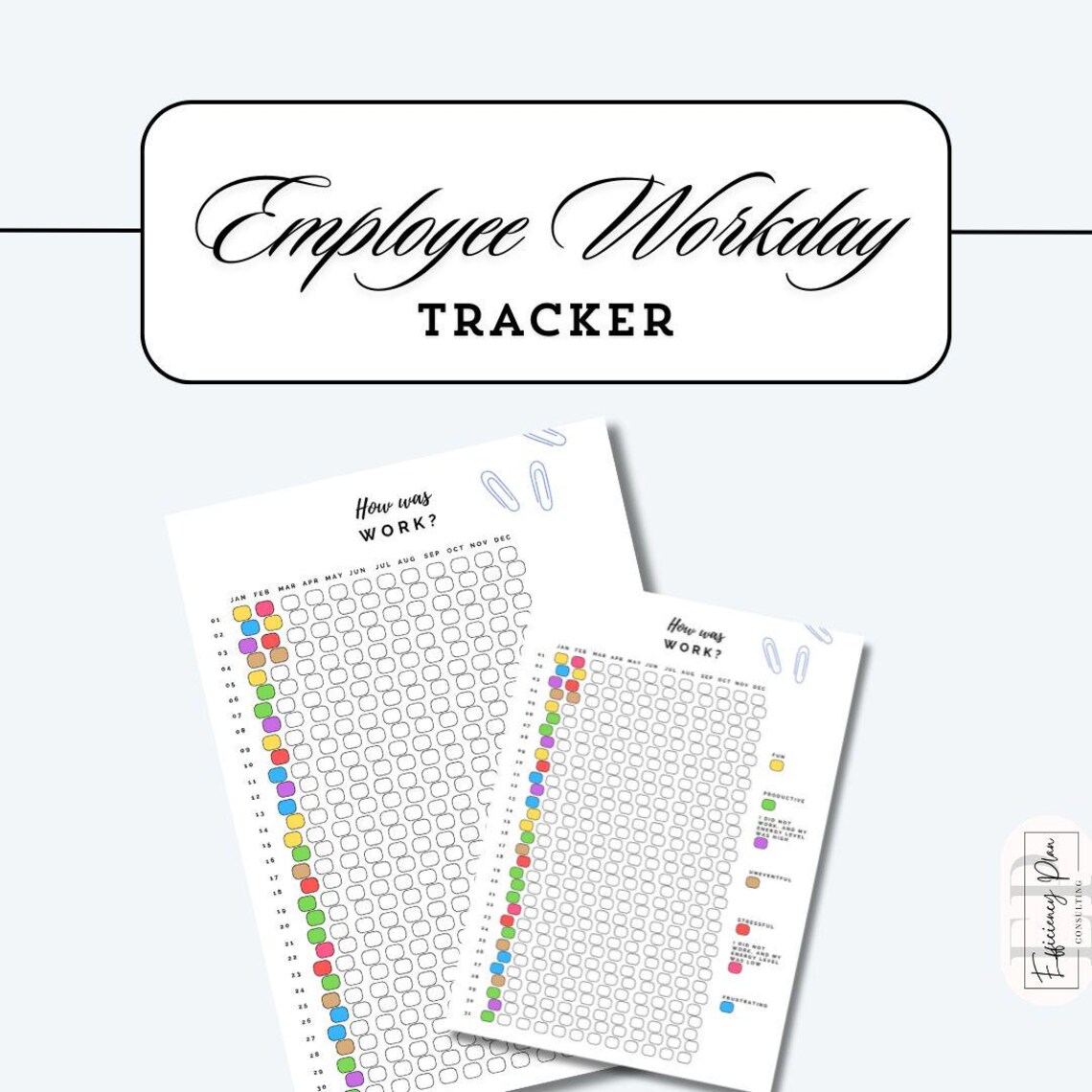
A gentle extra resource
A Simple Reflective Tool for Tracking How Work Actually Felt
If your team—or your own workflow—would benefit from greater awareness of daily work patterns, this printable from Efficiency Plan provides a simple way to reflect on whether the day felt productive, stressful, frustrating, enjoyable, uneventful, or somewhere in between.
Tracking those patterns over time can help identify recurring friction, workload issues, and opportunities to improve how work is structured.
View on Etsy from the Efficiency Plan Etsy Shop
What Changes When Open Loops Are Closed?
When teams consistently close loops, leadership no longer needs to carry every unfinished detail mentally.
- Leadership mental space returns.
- Delegation becomes more reliable.
- Employees build greater ownership.
- Status becomes easier to understand.
- Decisions are easier to find.
- Fewer tasks require repeated follow-up.
- More leadership time becomes available for planning, coaching, and improvement.
The goal is not to eliminate every unfinished task. Work will always move through stages.
The goal is to make sure unfinished work is visible, owned, documented, and moving toward a clear next step.
When that becomes part of the team’s operating culture, open loops stop quietly draining leadership capacity and start becoming manageable pieces of work with clear owners and outcomes.
Quick Questions About Open Loops and Leadership
What is an open loop at work?
An open loop is a task, decision, request, or responsibility that has been started but does not yet have clear closure. It may lack a completed outcome, documented decision, defined next step, deadline, or identifiable owner.
How can leaders reduce open loops without micromanaging?
Define what completion looks like, make ownership visible, require useful context with status updates, document important decisions, and establish a consistent process for handoffs and follow-up. The goal is to improve the system rather than increase surveillance.
How do open loops affect delegation?
When delegated work repeatedly returns to leadership for clarification or completion, leaders may become reluctant to step away. Clear ownership, documentation, expectations, and proactive communication make delegation more dependable and allow employees to build greater independence.