
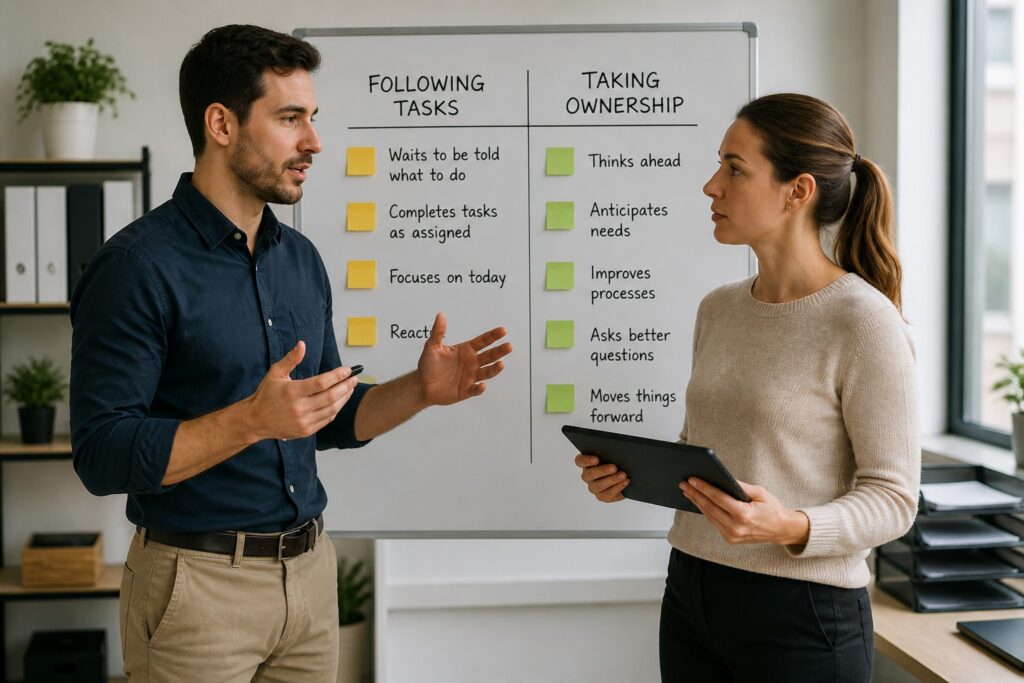
The Difference Between Following Tasks and Taking Ownership
There’s a difference between doing your job and owning your role.
Most people don’t think about that difference.
They show up. They complete tasks. They respond when something is asked of them.
On paper, that looks like work.
In practice, it often falls short.
What Low Ownership Looks Like
Low ownership is not always obvious.
It does not always look like someone refusing to work.
It looks like:
- waiting to be told what to do next
- completing tasks without thinking beyond them
- stopping when the immediate assignment is finished
- reacting instead of anticipating
Work gets done.
Progress is limited.
What Ownership Actually Looks Like
Ownership changes how someone approaches their time.
It looks like:
- thinking one or two steps ahead
- noticing gaps before they become problems
- finishing tasks in a way that prevents rework
- asking better questions
- moving things forward without being prompted
The same role produces very different results depending on which approach is taken.
Strong ownership also builds reliability at work. When people consistently follow through, communicate clearly, and take responsibility for what they have been given, others learn that they can count on them.
This idea extends beyond individual productivity. Gallup has also explored how shared ownership can strengthen team engagement by involving employees in determining what needs to be accomplished and helping them understand how their work contributes to important objectives.
An Office Coordinator in a Service Business
An 8-Hour Day With Low Ownership
- Answers calls as they come in
- Schedules appointments when asked
- Responds to messages throughout the day
- Updates notes as needed
- Waits for direction when something is unclear
At the end of the day:
- calls were answered
- tasks were handled
- nothing major went wrong
But:
- scheduling gaps remain
- follow-ups are inconsistent
- small issues carry into the next day
An 8-Hour Day With High Ownership
- Reviews the schedule and fills gaps proactively
- Confirms upcoming appointments before they become problems
- Groups calls and communication into focused blocks
- Flags potential conflicts early
- Organizes information so the team can move faster
At the end of the day:
- the schedule is tighter
- fewer issues need follow-up
- the next day is easier to run
Same role.
Same hours.
Different level of ownership.
Simple planning and accountability tools can also help make responsibilities, priorities, and next steps more visible, especially when you are trying to build stronger follow-through habits.
A Purchasing Coordinator in a Manufacturing Environment
An 8-Hour Day With Low Ownership
- Places orders when requested
- Responds to supplier emails as they come in
- Checks inventory when asked
- Follows instructions as given
At the end of the day:
- orders were placed
- communication happened
But:
- inventory risks were not identified early
- delays were not prevented
- decisions were reactive
An 8-Hour Day With High Ownership
- Reviews inventory levels proactively
- Anticipates ordering needs before shortages occur
- Follows up with suppliers before delays become issues
- Consolidates orders where possible
- Keeps leadership informed of potential risks
At the end of the day:
- fewer surprises
- smoother operations
- better use of time and resources
Same role.
Same hours.
Different outcome.
If you want to explore the idea of accountability and ownership more deeply, Extreme Ownership by Jocko Willink and Leif Babin offers another perspective on taking responsibility, leadership, and helping a team move forward.
Quick Questions About Ownership at Work
What does taking ownership at work mean?
Taking ownership means looking beyond the immediate task. It includes anticipating next steps, following through, communicating problems early, and helping move the work toward a completed outcome without waiting for constant direction.
What is the difference between completing a task and owning a responsibility?
Completing a task means doing what was specifically assigned. Owning a responsibility means also thinking about what happens next, identifying potential problems, communicating clearly, and making sure the work reaches the intended result.
How can employees develop more ownership?
Start by thinking one or two steps ahead, closing loops before moving on, communicating potential problems early, and asking what else needs to happen for the work to be truly complete.